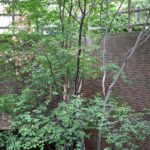
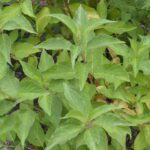
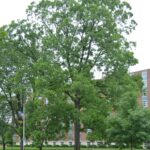
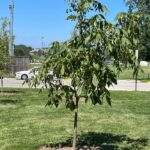
Shrub/Tree Amelanchier × grandiflora [Apple Serviceberry] The Apple Serviceberry is an attractive plant with multi-seasonal interest and can be found in both small tree or large shrub form. If the tree form is desirable, make sure to remove the suckers that arise from the roots, or the specimen will become shrubby. This is less of a problem for this hybrid species than its parents, Amelanchier arborea and A. laevis. The attractive white clusters of flowers give rise to sweet purple-black berries…
Tree Amelanchier × grandiflora 'Autumn Brilliance' [sold as Autumn Brilliance®] [Autumn Brilliance Apple Serviceberry] A. x grandiflora 'Autumn Brilliance is a vigorous selection with impressive blooms and bright red fall colors. It is resistant to leaf spot. The berries are frequently used to make jams, jellies, and pies. This selection can be found in both single and multi-trunk forms.
Shrub/Tree Amelanchier × grandiflora 'Ballerina' [Ballerina Serviceberry] A. x grandiflora is a hybrid cross between A. arborea and A. laevis that typically has larger, slender and longer flowers than its parents. Ripe fruits are sweet and edible that resemble the taste of blueberries.
Tree Amelanchier × grandiflora 'Robin Hill' [Robin Hill Serviceberry] A. x grandiflora is a hybrid cross between A. arborea and A. laevis that typically has larger, slender and longer flowers than its parents. Ripe fruits are edible and resemble the taste of blueberries.
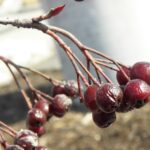
Shrub Indiana Native Aronia arbutifolia [Red Chokeberry] Red Chokeberry is often a multi-stem shrub that's native to Indiana as well as Eastern North America to Minnesota and south as far as Texas. This shrub bears white to slightly pinkish flowers with prominent anthers that gives it a unique look. Red berries form in September to often December. Best grown in mass plantings or for a naturalizing species in the landscape. Though the berries are bitter to taste, they are often used in…
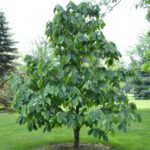
Tree Indiana Native Asimina triloba [Common Pawpaw] Needs filtered or full shade in its first few years, then tolerates full sun. Good specimen tree in a shady landscape. Fruits resemble a short, fat banana, at first green then turning yellowish then brown as they ripen in the fall, and taste like a combination between a banana and mango. Suckers rapidly.
Tree Carnegiea gigantea [Saguaro] Arms form only after the plant reaches 50 or 60 years old. Plants may live 200 years. The ribs expand or contract depending on the amount of water being stored. Found mostly on gravelly slopes. Gila woodpeckers make their homes in the trunk. Young plants need protection from sun. Transplant readily but more difficult with older plants. State flower of Arizona. Protected. Must be transplanted from construction site. Transplant with same orientation to sun as…
Tree Indiana Native Carya illinoinensis [Pecan] The Pecan is a tall, straight-trunked tree and is the largest of the hickories. It is well-known for its sweet, edible nuts and because of this, it is an important horticultural crop in the south, where it produces fruit most abundantly. However, it is not generally recommended for use in the landscape, due to its pest susceptibility and litter problem. With its large taproot, it can also be quite difficult to transplant.
Tree Indiana Native Carya laciniosa [Shellbark Hickory] This high branching tree has a straight, slender trunk, narrowing crown, and small spreading branches with the lower branches drooping and upper branches ascending. The nut that is produced is sweet and edible. The Shellbark Hickory is similar to C. ovata (Shagbark Hickory) in many respects, except it does not grow as large and tends to grow near lowlands or bottomlands where there is more moisture in the soil. The wood from this tree provides…