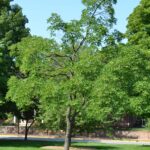
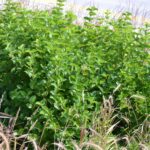
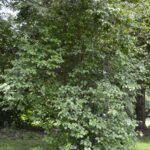
Tree Indiana Native Sassafras albidum [Common Sassafras] Roots sucker and form thickets, which may or may not be desirable. Sassafras tea contains safrole, a mild carcinogen banned in food products. Iron chlorosis in high pH can turn leaves yellow.
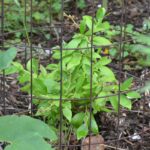
Shrub Indiana Native Staphylea trifolia [American Bladdernut] An upright, heavily branched, suckering shrub; sometimes wide-spreading, as a small tree. Used in naturalizing; best reserved for parks and other low maintenance areas; rather nice for foliage effect.
Shrub Indiana Native Symphoricarpos albus [Common Snowberry] Useful as a bank cover or large scale groundcover. Transplants well. This plant has a beautiful fruit show and is shade tolerant, however, it is also a twiggy, "garbage can plant" (collects leaves and blowing debris); this quality (especially prominent in the fall and winter) limits its usability in the landscape.
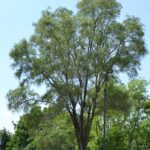
Tree InvasiveThis plant is considered invasive Ulmus pumila [Siberian Elm] Grows under almost any conditions, especially useful in dry sites. Resists Dutch elm disease. Leaf beetles can defoliate trees. Brittle branches and subsequently messy. Avoid planting this tree in the landscape, unless there is no other choice. Considered invasive in many areas.
Shrub Indiana Native Vaccinium angustifolium [Lowbush Blueberry] The Lowbush Blueberry requires acidic soils with a pH between 4.5 and 5.5. Iron chlorosis can be a problem in higher pH soils. Mulch around roots to maintain high organic matter. For higher blossom and berry output, grow in full sun. Berries are sweet and edible.
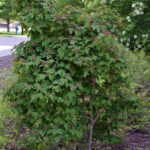
Shrub Indiana Native Viburnum acerifolium [Mapleleaf Viburnum] The Mapleleafe Viburnum is a shade and drought tolerant plant that is excellent for naturalizing. Tolerant to the poison excreted by Black Walnuts.
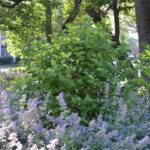
Shrub Indiana Native Viburnum dentatum [Arrowwood Viburnum] Can look ragged in dry soil. Flowers malodorous to some. Attractive to birds. Name derived from Native American use of strong sucker shoots for arrow shafts. The most durable of viburnums. Serves as a nice neutral background shrub.
Shrub Viburnum dentatum 'Christom' [sold as Blue Muffin™] [Blue Muffin Arrowwood Viburnum] 'Christom', often sold under the name Blue Muffin, is a compact variant known for its strongly blue fruits. Flowers malodorous to some. Attractive to birds. Name derived from Native American use of strong sucker shoots for arrow shafts. The most durable of viburnums. Serves as a nice neutral background shrub.
Shrub Viburnum dentatum 'Synnesvedt' [sold as Chicago Lustre®] [Chicago Lustre Arrowwood Viburnum] 'Synnesvedt', often sold under the name Chicago Lustre, is known for attractive, clean, lustrous foliage and abundant blue-black fruits. Flowers malodorous to some. Attractive to birds. Name derived from Native American use of strong sucker shoots for arrow shafts. The most durable of viburnums. Serves as a nice neutral background shrub.
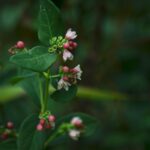
Shrub/Tree Indiana Native Viburnum lentago [Nannyberry Viburnum] The Nannybery can be grown as a large, suckering shrub or small tree and is noted for its white flower cymes and edible berries. The flower buds for the following year are formed in the summer, so if pruning is desired, it should be completed immediately after flowering.