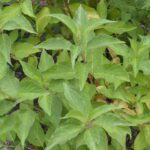
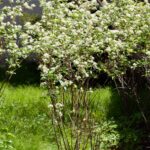
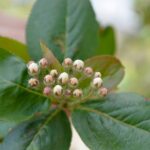
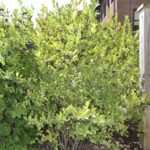
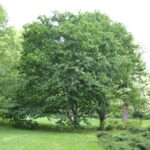
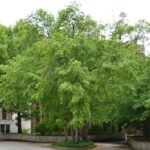
Tree Amelanchier laevis 'JFS-Arb' [sold as Spring Flurry®] [Spring Flurry Allegheny Serviceberry] An excellent tree for naturalizing and for very early, but short-lived, bloom, the Spring Flurry Allegheny Serviceberry has an upright form and grows larger than the species type, up to 35 feet tall. Fruits are edible and a prime source of food for birds. Subject to the troubles of Rosaceous plants in general, including fire-blight and mites, which can be controlled, usually quite easily.
Tree Amelanchier laevis 'Rogers' [sold as Lustre®] [Lustre Allegheny Serviceberry] Lustre Allegheny Serviceberry is a medium-size tree and is a good choice for attracting birds as the berries are edible.
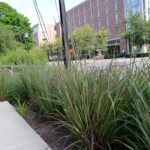
Herbaceous Andropogon gerardii 'Karl’s Cousin' [Karl's Cousin Big Blue Stem] This grass is a self seeder and has a large root system. Very drought tolerant once established and is very easily maintained.
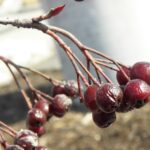
Shrub Indiana Native Aronia arbutifolia [Red Chokeberry] Red Chokeberry is often a multi-stem shrub that's native to Indiana as well as Eastern North America to Minnesota and south as far as Texas. This shrub bears white to slightly pinkish flowers with prominent anthers that gives it a unique look. Red berries form in September to often December. Best grown in mass plantings or for a naturalizing species in the landscape. Though the berries are bitter to taste, they are often used in…
Shrub Aronia arbutifolia 'Brilliantissima' [Brilliant Red Chokeberry] The Brilliant Red Chokeberry has dark green leaves that turn a stunning deep red in the fall. 'Brilliant' produces larger and more abundant flowers and a greater number of red berries than the species type. Because birds find the fruits unappealing, the berries are allowed to persist well into the winter months. This plant tends to sucker and create colonies.
Shrub Indiana Native Aronia melanocarpa [Black Chokeberry] This Indiana native shrub is similar to the Red Chokeberry in habit and form, but differs in that the Black Chokeberry is larger, has black-colored fruits, broader leaves, and generally larger flowers. Place in a higher light location for the best flower and fruit display. Best used for naturalizing, mass plantings, and wetland reclamation projects. The berries are edible, but only palatable when used in jellies and jams.
Shrub Aronia melanocarpa 'Autumn Magic' [Autumn Magic Black Chokeberry] The Autumn Magic Black Chokeberry is known for its outstanding bright purple to red to orange fall color, compact form, and large, attractive fruits. Place in a higher light location for the best flower and fruit display. Best used for naturalizing, mass plantings, and wetland reclamation projects. The berries are edible, but only palatable when used in jellies and jams.
Tree Indiana Native Betula alleghaniensis [Yellow Birch] Graceful tree, interesting for its shining bark beginning yellowish or bronze and exfoliating in thin shreds, becoming reddish brown until finally forming blackish-brown plates. Especially well adapted to wet soils. Does not do well in dry situations. Less subject to the borer troubles of B. papyrifera in the Midwest.
Tree Indiana Native Betula nigra [River Birch] Graceful tree, interesting for its curling bark, and especially well adapted to wet soils. Immune to the bronze birch borer, which is a serious problem for the native Betula papyrifera in the Midwest. This species prefers full sun and is quite heat tolerant, but does not have tolerance for drought. If pruning is required, prune in summer or during the dormant season.