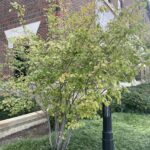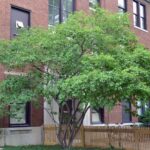
Shrub/Tree Indiana Native Audio Recording AvailablePurdue Plant Doctor Available Amelanchier canadensis 'Sprizam' [sold as Spring Glory®] [Spring Glory Shadblow Serviceberry] A new variety, notable for its compact, upright habit reaching only 12' tall and 8-10' wide. Indiana NativeAudio Recording AvailablePurdue Plant Doctor Available
Shrub/Tree Purdue Plant Doctor Available Amelanchier × grandiflora 'Ballerina' [Ballerina Serviceberry] A. x grandiflora is a hybrid cross between A. arborea and A. laevis that typically has larger, slender and longer flowers than its parents. Ripe fruits are sweet and edible. Purdue Plant Doctor Available
Tree Purdue Plant Doctor Available Amelanchier × grandiflora 'Robin Hill' [Robin Hill Serviceberry] A. x grandiflora is a hybrid cross between A. arborea and A. laevis that typically has larger, slender and longer flowers than its parents. Ripe fruits are edible. Purdue Plant Doctor Available
Tree Indiana Native Audio Recording AvailableID That Tree Video AvailablePurdue Plant Doctor Available Amelanchier laevis [Allegheny Serviceberry] An excellent small tree for naturalizing and for very early, but short-lived, bloom. Fruits are edible and a prime source of food for birds. Can produce fruit by apomixis. Subject to the troubles of Rosaceous plants in general, including fire-blight and mites, which can be controlled, usually quite easily. Indiana NativeAudio Recording AvailableID That Tree Video AvailablePurdue Plant Doctor Available
Tree Purdue Plant Doctor Available Amelanchier laevis 'Rogers' [sold as Lustre®] [Lustre Allegheny Serviceberry] Lustre Allegheny Serviceberry is a medium-size tree and is a good choice for attracting birds as the berries are edible. Purdue Plant Doctor Available
Shrub Indiana Native Audio Recording Available Amorpha fruticosa [Indigobush Amorpha] The Indigobush Amorpha is a Indiana native shrub that can be found along river banks and shallow marshes. This shrub can be planted in areas of poor soil where few other plants will survive, as well as used for erosion control. To avoid weediness, seeds can be collected shortly after flowering as it can spread readily by seeds. Common problems of Amorpha fruticosa includes rust, leaf spots, powdery mildew and twig canker. Some gall problems… Indiana NativeAudio Recording Available
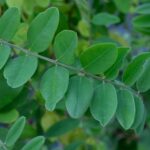
Shrub/Tree Indiana Native Audio Recording AvailableID That Tree Video Available Aralia spinosa [Devil's Walkingstick] Slow growth rate, but fast on roots (forms a very coarse thicket). Sucker shoots can be a maintenance problem if tree form is desired. Sharp prickles also make maintenance difficult, and are a minor hazard to children. Otherwise, no serious problems with this plant. Very adaptable and easy to grow, tolerating most conditions except wet soil. Drought tolerant, and best in full sun. Excellent selection in a mass planting near buildings having poor soils. Indiana NativeAudio Recording AvailableID That Tree Video Available
Shrub Indiana Native Audio Recording Available Arctostaphylos uva-ursi [Bearberry] Hard to establish, can develop winter burn from sun and wind when cold. Does not like excessive summer heat. Can develop foliar diseases (leaf spot) when stressed. Leaves are used to make a tea in some parts of Russia, where it is known as Kutai and Caucasian Tea. The dried leaves have been used to treat diseases of the bladder and kidney, and inflammatory diseases. Indiana NativeAudio Recording Available
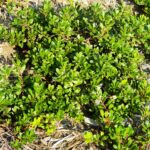
Herbaceous Audio Recording Available Arctostaphylos uva-ursi 'Massachusetts' [Massachusetts Bearberry] 'Massachusetts' is known for having a large amount of flowers and fruits and its disease resistance to leaf gall and leaf spot. Also has smaller leaves than any other plant in the species. Audio Recording Available
Shrub Indiana Native Audio Recording AvailablePurdue Plant Doctor Available Aronia arbutifolia [Red Chokeberry] Red Chokeberry is often a multi-stem shrub that's native to Indiana as well as Eastern North America to Minnesota and south as far as Texas. This shrub bears white to slightly pinkish flowers with prominent anthers that gives it a unique look. Red berries form in September to often December. Best grown in mass plantings or for a naturalizing species in the landscape. Though the berries are bitter to taste, they are often used in… Indiana NativeAudio Recording AvailablePurdue Plant Doctor Available