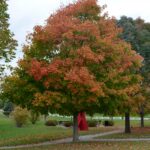
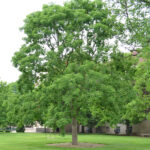
Tree Purdue Plant Doctor Available Acer saccharum 'Green Mountain' [sold as Green Moutain®] [Green Mountain Sugar Maple] The Green Mountain Sugar Maple is heat tolerant and resistant to leaf scorch. This cultivar has a nice pyramidal shape, strong central trunk, and brilliant orange to scarlet fall foliage. Purdue Plant Doctor Available
Tree Purdue Plant Doctor Available Acer saccharum 'JFS-Caddo2' [sold as Flashfire™] [Flashfire Sugar Maple] Come fall the Flashfire® Sugar Maple turns bright red before the foliage drops. The season interest does not stop there, in spring and throughout summer the foliage is glossy and dark green. Purdue Plant Doctor Available
Tree Purdue Plant Doctor Available Acer saccharum 'JFS-KW8' [Sold as Autumn Fest®] [Autumn Fest Sugar Maple] Selected for upright habit with good central leader, vigorous growth, and bright bright red fall color. Purdue Plant Doctor Available
Tree Purdue Plant Doctor Available Acer saccharum 'Legacy' [Legacy Sugar Maple] The Legacy Sugar Maple is one of the most used Sugar Maple cultivars. It is known for its attractive oval form and excellent scarlet-orange fall color. Legacy is tolerant to dense shade, leaf tatter, and mild drought and is a relatively long-lived tree. Purdue Plant Doctor Available
Tree Indiana Native Audio Recording AvailableID That Tree Video AvailablePurdue Plant Doctor Available Acer saccharum ssp. nigrum [Black Maple] The Black Maple is a close relative of the Sugar Maple. Typically, Black Maples tolerate and grow in wetter soils than the Sugar Maple, but they are equally shade tolerant. Black Maples do not tolerate salts and are therefore poor street trees. This species prefers deep, uncompacted soils. Indiana NativeAudio Recording AvailableID That Tree Video AvailablePurdue Plant Doctor Available
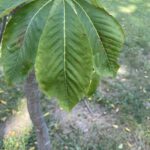
Tree Indiana Native Audio Recording AvailableID That Tree Video AvailablePurdue Plant Doctor Available Aesculus flava [Yellow Buckeye] The Yellow Buckeye is a large, majestic native tree that is widely adapted to soils and environments; however, very dry conditions must be avoided. Drought causes early leaf drop and leaf blotch, and leaf scorch can disfigure foliage in dry soil. That being said, this species is less prone to foliar problems than the related Aesculus glabra (Ohio Buckeye) is. Difficult to transplant once established due to long taproot. Large, abundant fruits in autumn can… Indiana NativeAudio Recording AvailableID That Tree Video AvailablePurdue Plant Doctor Available
Tree Indiana Native Audio Recording AvailableID That Tree Video AvailablePurdue Plant Doctor Available Aesculus glabra [Ohio Buckeye] Widely adapted to soils and environments; however, very dry conditions must be avoided. Drought causes early leaf drop. Leaf blotch and leaf scorch often disfigure foliage, especially in dry soil. Spiny fruits in autumn can be troublesome underfoot, and eliminates species type as a good street tree. Fruits are toxic, containing 3-5% saponins. Indiana NativeAudio Recording AvailableID That Tree Video AvailablePurdue Plant Doctor Available
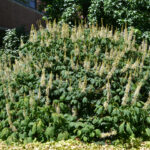
Shrub Indiana Native Audio Recording AvailablePurdue Plant Doctor Available Aesculus parviflora [Bottlebrush Buckeye] Can be kept at a smaller size for a time with careful pruning, but it will in time occupy much space. Tolerates some shade, and can even be attractive under large shade trees. Suckers quite freely. Indiana NativeAudio Recording AvailablePurdue Plant Doctor Available
Tree Indiana Native Audio Recording AvailableID That Tree Video AvailablePurdue Plant Doctor Available Amelanchier arborea [Downy Serviceberry] Would grow well on a streambank. Susceptible to rust, leaf blight, powdery mildew, fruit rot, leaf minor, borers, and scale. Rarely requires pruning. Indiana NativeAudio Recording AvailableID That Tree Video AvailablePurdue Plant Doctor Available
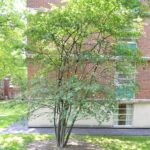
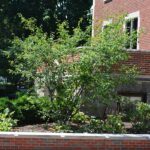
Shrub/Tree Indiana Native Audio Recording AvailablePurdue Plant Doctor Available Amelanchier canadensis [Shadblow Serviceberry] Amelanchier canadensis, the Shadblow Serviceberry, tends to be confused with Amelanchier arborea, the Downy Serviceberry, and Amelanchier laevis, the Allegheny Serviceberry. However, A. canadensis, compared to A. arborea and A. laevis, is generally much more shrub-like (often forming thickets), flowers a week later, and produces upright flower clusters (as opposed to the pendulous racemes of A. arborea and A. laevis). The Shadblow Serviceberry is excellent for woodland plantings, naturalizing, and along stream and pond banks.… Indiana NativeAudio Recording AvailablePurdue Plant Doctor Available