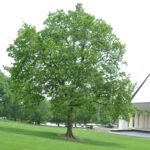
Tree Indiana Native Audio Recording AvailableID That Tree Video AvailablePurdue Plant Doctor Available Celtis occidentalis [Common Hackberry] As well adapted to Midwestern conditions as American Elm, and a reasonably good substitute in form as well. Especially useful in large-scale situations with dry soils and heavy winds. Subject to a leaf nipple gall (caused by psyllid insect Pachypsylla dismamma, one of many jumping plant lice) and witches'-broom disease (caused by Eriophyid mite), both minor in most situations in the Midwest. Especially coarse texture limits use in designed landscapes. Indiana NativeAudio Recording AvailableID That Tree Video AvailablePurdue Plant Doctor Available
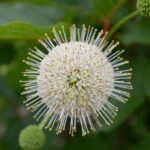
Shrub Indiana Native Audio Recording AvailableID That Tree Video Available Cephalanthus occidentalis [Common Buttonbush] Buttonbush is an Indiana native and a wet-soil tolerant shrub found near marshes, wetlands, and river banks. This is a great choice for those wet areas in the landscape or a featured shrub in your rain garden. The flowers of this shrub are globe-like in shape and bloom from June through August, attracting wildlife such as butterflies. The leaves of the Buttonbush emerge late in the Spring and might look dead until mid-May. Though this… Indiana NativeAudio Recording AvailableID That Tree Video Available
Shrub Cephalanthus occidentalis 'Bailoptics' [sold as Fiber Optics®] [Fiber Optics Buttonbush] Fiber Optics® has a compact form with shoots that appear as a reddish-brown on new growth. It also has white fragrant flowers that appear as a sphere-like shape.
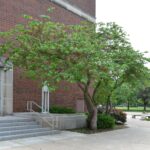
Tree Indiana Native Audio Recording AvailableID That Tree Video AvailablePurdue Plant Doctor Available Cercis canadensis [Eastern Redbud] A fine small tree that grows wild in many parts of Indiana. Relatively trouble-free and drought-resistant. Requires some protection from the sun in hotter climates, however flowering decreases with deep shade. Canker, leaf spot, and verticillium wilt can be problematic for older trees, or trees weakened by other environmental stresses. Due to genetic variability, be sure of seed source. Long tap root means that older plants transplant poorly. Indiana NativeAudio Recording AvailableID That Tree Video AvailablePurdue Plant Doctor Available
Tree Indiana Native Audio Recording AvailableID That Tree Video AvailablePurdue Plant Doctor Available Cladrastis kentukea [American Yellowwood] A highly ornamental native tree, even though the pendulous clusters of flowers do not appear in great numbers every year. Well-adapted to Midwest conditions. Develops a tap root. Does not flower fully each year; part of a tree may flower one year, part the next, but the effect is striking even when only certain branches bear flowers. Bees are attracted to the flowers. Flowers appear only after many years from seed. Avoid pruning in spring… Indiana NativeAudio Recording AvailableID That Tree Video AvailablePurdue Plant Doctor Available
Shrub Indiana Native Audio Recording Available Clethra alnifolia [Summersweet Clethra] Spreads by underground stems to make large clumps, but can be restrained when necessary. Can be badly infested with mites, especially on dry soils. Can suffer in full sun and/or dry soils, but can bloom well in shade. Indiana NativeAudio Recording Available
Tree Indiana Native Audio Recording AvailableID That Tree Video AvailablePurdue Plant Doctor Available Cornus alternifolia [Pagoda Dogwood] Broad-spreading, low branched, forming stratified tiers, very interesting branching habit. Leaf spot and twig blight/canker can be problem for older trees. Indiana NativeAudio Recording AvailableID That Tree Video AvailablePurdue Plant Doctor Available
Shrub Indiana Native Audio Recording AvailablePurdue Plant Doctor Available Cornus amomum [Silky Dogwood] Easy to transplant. Relatively trouble-free. A three-year pruning cycle improves form, vigor, and winter stem color effect. Cutting all stems 6-12" from ground in late winter has similar effect. Best in mass plantings. Excellent for winter color. Scale and leaf spot can be a problem. Can appear a bit coarse in the landscape. Indiana NativeAudio Recording AvailablePurdue Plant Doctor Available
Tree Indiana Native Audio Recording AvailablePurdue Plant Doctor Available Cornus drummondii [Roughleaf Dogwood] Very similar to C. amomum. Indiana NativeAudio Recording AvailablePurdue Plant Doctor Available
Tree Indiana Native Audio Recording AvailableID That Tree Video AvailablePurdue Plant Doctor Available Cornus florida [Flowering Dogwood] One of the finest small trees, interesting at almost every season. Distinct horizontal branching patterns. Widely adaptable, but material of different geographic origin varies widely in hardiness. Fruit is an important food supply for native birds and other animals. Not extremely drought-tolerant, but useful in most parts of the Midwest. Dogwood borer and dogwood anthracnose (caused by Discula destructiva) can be problematic, especially in the Eastern and Southern US. Difficult to transplant. Not pollution tolerant.… Indiana NativeAudio Recording AvailableID That Tree Video AvailablePurdue Plant Doctor Available