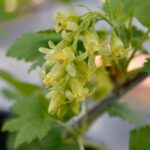
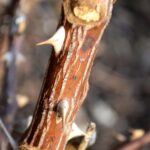
Shrub Indiana Native Ribes americanum [American Black Currant] American Black Currant is a shade and wet soil tolerant shrub species often found in our Indiana woodlands. Small greenish-white flowers bloom in May which leads to dark red to black fruits that ripen in late August/September. When placed in full sun, a brilliant reddish orange fall color is produced but often golden yellow in the fall. The edible fruits are used in jams and jellies and are desirable food source for wildlife. An alternative…
Shrub Indiana Native Robinia hispida var. fertilis [Bristly Locust] Can fix nitrogen. Especially well adapted to poor, dry, alkaline soils. Though native, can be invasive on sandy soils. Frequent pruning may be needed.
Tree Indiana Native Robinia pseudoacacia [Black Locust] Widely variable in form, the most picturesque are straight-trunked with branches abruptly fanning out at the top. Fixes N2. Locust borers are troublesome and difficult to control, but many trees live with them successfully for many years. Leaf minors and permanently wet soils can be problems.
Shrub Rosa × 'Meisentmil' [sold as Lemon Drift®] [Lemon Drift Rose] The Lemon Drift Rose has petite yellow creamy flowers that make this shrub a beautiful statement planting. A great choice as well because the Drift Rose is disease resistant.
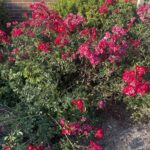
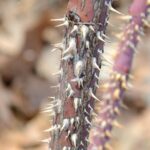
Shrub Rosa × 'Radtko' [sold as The Double Knock Out®] [The Double Knock Out Rose] The Double Knock Out Rose is a compact, bushy plant that prolifically produces fragrant, double, cherry-red flowers from summer through fall. While this is a very low maintenance and disease resistant rose, good cultural practices are still advised. Avoid wetting the foliage when watering, place the plant in an area with good air circulation, and remove dead or diseased plant matter as soon as possible. Branches are covered with thorns, making pruning difficult.
Shrub Rosa rugosa [Rugosa Rose] Widely adapted to soils and exposures, but especially good in full sun on dry soils. Relatively trouble-free among roses, even resists the common rose pathogens and phytopagous insects. The hips (rose fruits) are a rich source of vitamin C and used commercially in teas. Can get borers in canes (rarely). Good cultural practices are important for roses in order to prevent disease and other pests. Avoid wetting the foliage when watering, place the plant in…
Shrub Rosa × 'Thérèse Bugnet' [Double Rugosa Rose] 'Thérèse Bugnet' is a hybrid cultivar of Rosa rugosa that has fragrant, double, pink flowers and lustrous, red canes. Susceptible to rose stem girdler and slightly susceptible to black spot. Good cultural practices are important for roses in order to prevent disease and other pests. Avoid wetting the foliage when watering, place the plant in an area with good air circulation, and remove dead or diseased plant matter as soon as possible. Widely adapted to…
Shrub/Tree Salix caprea [Pussy Willow] Salix caprea is one of several species commonly referred to as "Pussy Willows". The common name is derived from the silky soft male catkins (species is dioecious). Tolerates heavy pruning and can be cut to the ground every 3-5 years to maintain size. The wood of this plant is weak and easily damaged. This species is susceptible to many pests and diseases.
Shrub/Tree Salix eriocephala 'Ames 27768' [Heart-leaved Willow] The Heart-Leaved Willow in the wild is found along riverbanks, this tree is used for erosion control and thrives in wet soil.