Shrub Indiana Native Audio Recording AvailablePurdue Plant Doctor Available Opuntia humifusa [Pricklypear] The Pricklypear is a cactus native to the eastern United States, including Indiana, and is hardy to USDA zone 4. The cactus pads can break off and root into the ground, forming colonies. It is an evergreen plant, but becomes shriveled and wilted during cold winters. Fruits are edible and are often used to make jams and candies. The pads (fleshy green segments with thorns) are also edible as a roasted vegetable. This plant has… Indiana NativeAudio Recording AvailablePurdue Plant Doctor Available
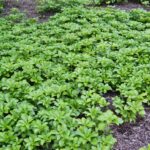
Liana (Climbing Vine) Audio Recording AvailablePurdue Plant Doctor Available Pachysandra terminalis [Japanese Spurge] Tolerates full shade, and requires at least partial shade. Does well under shallow-rooted trees with some irrigation. One of the most effective ground covers in resisting encroachment of weeds. Volutella leaf blight can be problem. Audio Recording AvailablePurdue Plant Doctor Available
Shrub Audio Recording AvailablePurdue Plant Doctor Available Pinus mugo 'Valley Cushion' [Dwarf Mugo Pine] 'Valley Cushion' is a very slow-growing (approximately 1.5" a year) dwarf cultivar that is excellent for rock gardens and bonsai. Can be disfigured by scale insects. Audio Recording AvailablePurdue Plant Doctor Available
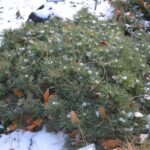
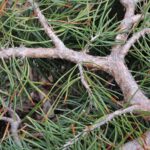
Shrub Purdue Plant Doctor Available Pinus sylvestris 'Hillside Creeper' [Creeping Scotch Pine] 'Hillside Creeper' is a low-growing, spreading evergreen that can be used as a groundcover. Tolerant of fairly dry soils, but not a good specimen in shade or on wet soils. Purdue Plant Doctor Available
Tree Purdue Plant Doctor Available Platanus × acerifolia 'Morton Circle' [sold as EXCLAMATION!™] [Exclamation London Planetree] 'Morton Circle' is a cultivar with exfoliating tan bark exposing white underneath. It has large palmately lobed leaves, and is monoecious with different fruit size and color. Purdue Plant Doctor Available
Tree Purdue Plant Doctor Available Populus tremuloides 'NE Arb' [sold as Prairie Gold®] [Prairie Gold Quaking Aspen] Prairie Gold® Quaking Aspen is more tolerant to urban conditions including heat, drought, and humidity. The Aspen's name is derived from its golden yellow fall color. Native from Labrador to Alaska, south to Pennsylvania, Missouri, northern Mexico and lower California. Purdue Plant Doctor Available
Shrub Indiana Native Audio Recording AvailablePurdue Plant Doctor Available Prunus pumila [Sand Cherry] Prunus pumila is a creeping, low-growing small shrub naturally found in sandy locations, such as dunes, where it acts an important stabilizer. The cherry fruits are too bitter to eat fresh, but can be used in jams and jellies. Indiana NativeAudio Recording AvailablePurdue Plant Doctor Available
Tree InvasiveThis plant is considered invasive Audio Recording AvailableID That Tree Video AvailablePurdue Plant Doctor Available Pyrus calleryana 'Glen’s Form' [sold as Chanticleer®] [Chanticleer Callery Pear] Generally considered to be one of the best cultivars of P. calleryana. While still prone to limb breakage, it is stronger wooded than other variants. The Chanticleer Callery Pear is also known for its resistance to fireblight. Flowers are malodorous and often killed by late spring freezes. Very small fruits are a litter problem when abundant. Considered invasive in many areas. Audio Recording AvailableID That Tree Video AvailablePurdue Plant Doctor Available
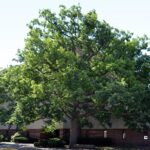
Tree Indiana Native Audio Recording AvailableID That Tree Video AvailablePurdue Plant Doctor Available Quercus alba [White Oak] One of the most majestic trees at maturity with a picturesque framework, but requires many years to reach maturity. Long-lived, the kind of tree to use where it can be appreciated by succeeding generations. Slow growth eliminates it as a tree for quick effect. Roots are highly sensitive to disturbance, even foot traffic. Almost impossible to transplant from the wild. Often difficult to find in nurseries due to slow growth and recalcitrance to propagation by… Indiana NativeAudio Recording AvailableID That Tree Video AvailablePurdue Plant Doctor Available
Tree Audio Recording AvailablePurdue Plant Doctor Available Quercus × 'Crimschmidt' [sold as Crimson Spire™] [Crimson Spire Oak] The Crimson Spire Oak is notable for its powdery mildew resistance and reddish fall color that it gained from its White Oak parent, in addition to the dense, strong, vertical, columnar form, and tolerance to drought and urban conditions gained from its Fastigiate English Oak parent. Audio Recording AvailablePurdue Plant Doctor Available