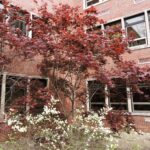
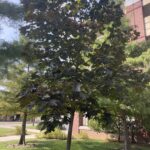
Tree Acer palmatum var. atropurpureum 'Bloodgood' [Bloodgood Japanese Maple] This popular tree is chosen for its stunning purplish-red leaves during the summer months. However, if the summer is particularly hot and dry, the color will dull to a greenish-red hue.
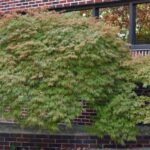
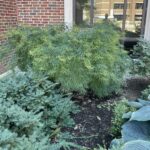
Tree Acer palmatum var. dissectum atropurpureum 'Ever Red' [Ever Red Cutleaf Japanese Maple] The branching of this attractive Japanese Maple cultivar provides a weeping affect to the landscape. This variety holds its color longer than most other varieties of Japanese Maple, and is also one of the smaller forms. 'Ever Red' can handle more urban soils but prefers acidic, moist soils. Best coloration occurs if in partial shade.
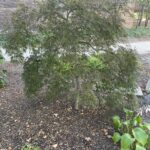
Shrub/Tree Acer palmatum var. dissectum atropurpureum 'Tamukeyama' [Tamukeyama Japanese Maple] This is a popular cultivar with red-purple leaves and a mounding growth form. The leaves turn a vivid red in the fall. With the leaf color and interesting growth habit, this makes an excellent accent tree in the landscape.
Tree Acer palmatum var. dissectum 'Waterfall' [Waterfall Japanese Maple] Best grown in moist, well-drained, organic soils. Avoid hot, dry, or excessively windy sites. New foliage may scorch in full sun location. Chlorosis may occur in high pH soils. Pruning should be kept to a minimum as it often results in significant bleeding especially in the spring/summer. The 'Waterfall' variety is a weeping cultivar that displays cascading branching.
Tree InvasiveThis plant is considered invasive Acer platanoides 'Crimson King' [Crimson King Norway Maple] Crimson King is a common cultivar used in the industry for its rich maroon foliage throughout the growing season. One of the densest shade trees, widely adaptable to soils and environments, including dry and polluted city conditions. Transplants easily. Extremely dense canopy and shallow root system make it impossible to maintain good turf beneath. Slight susceptibility to verticillium wilt, anthracnose, and leaf scorch. When Norway maple escapes cultivation and invades natural areas it reduces species…
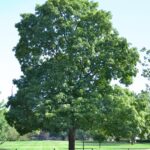
Tree Indiana Native Acer saccharum [Sugar Maple] Widely adapted to climate, but best in at least reasonably fertile soil. One of the best shade tree species over a wide area, but for best results select plants known for adaptability to the local region. Quite shade tolerant. Low maintenance in a good site. 50 gal. sap or more needed to make 1 gal. syrup. Not so drought-tolerant as silver maple, but reasonably so. Does poorly in compacted soils, and doesn't like salt spray.…
Tree Acer saccharum 'Barrett Cole' [sold as Apollo®] [Apollo Sugar Maple] This cultivar has a unique narrow to columnar shape with dense branching and a generally small size. Has been noted for its resistance to the Japanese beetle. Tolerant of soils although does best in deeper soils. Great coloration during fall months, full sun encourages a deep red fall color.
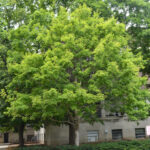
Tree Acer shirasawanum 'Aureum' [Golden Full Moon Maple] This unique cultivar has light green to almost yellow, 9 to 13-lobed leaves and is a perfect choice as a small, specimen tree. It is also often trimmed into a shrub form. This plant prefers cooler summers. During spring, small reddish-purple flowers bloom in April to give way to stunning red samaras. The Golden Full Moon Maple has brilliant fall foliage in gold to orange-red.
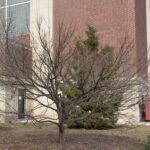
Tree Acer triflorum [Three-Flower Maple] Acer triflorum tends to be an understory tree in its natural habitat. Its beautiful exfoliating bark reveals a rusty brown coloration, providing attractive winter interest. Its shallow root system cannot handle drought well, unless properly mulched. This maple can handle full shade but is best in part shade to full sun.