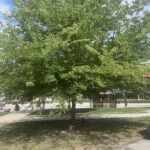
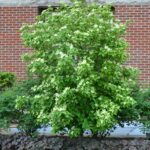
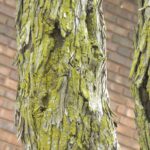
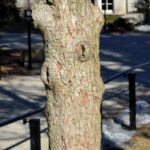
Tree Indiana Native Celtis laevigata [Sugar Hackberry] The Sugar Hackberry is very similar to the Common Hackberry (Celtis occidentalis) and is especially useful in large-scale situations with dry soils and heavy winds. This species gained its common name from the juicy, sweet berries it produces. Subject to a leaf nipple gall (caused by psyllid insect Pachypsylla dismamma, one of many jumping plant lice). However, the Sugar Hackberry is more resistant to witches'-broom disease (caused by Eriophyid mite) than the Common Hackberry. Especially…
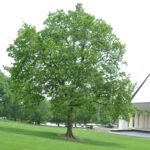
Tree Indiana Native Celtis occidentalis [Common Hackberry] As well adapted to Midwestern conditions as American Elm, and a reasonably good substitute in form as well. Especially useful in large-scale situations with dry soils and heavy winds. Subject to a leaf nipple gall (caused by psyllid insect Pachypsylla dismamma, one of many jumping plant lice) and witches'-broom disease (caused by Eriophyid mite), both minor in most situations in the Midwest. Especially coarse texture limits use in designed landscapes.
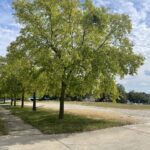
Tree Celtis occidentalis 'Prairie Pride' [Prairie Pride Hackberry] As well adapted to Midwestern conditions as American Elm, and a reasonably good substitute in form as well. Especially useful in large-scale situations with dry soils and heavy winds. 'Prairie Pride' has glossy, thick, leathery leaves and is less of a litter problem than the species type due to its lower fruit production. Subject to a leaf nipple gall (caused by psyllid insect Pachypsylla dismamma, one of many jumping plant lice), but is not subject…
Tree Cercis canadensis 'Hearts of Gold' [Gold-Leaf Eastern Redbud] 'Hearts of Gold' is a striking redbud cultivar with reddish-orange tinted emerging leaves that turn bright yellow and finally deepen to a bright green towards the end of the summer. The yellow color develops most intensely under higher light conditions. A fine small tree that is relatively trouble-free and drought-resistant (although the yellow foliage color will become green in drought conditions). Canker, leaf spot, and verticillium wilt can be problematic for older trees, or trees…
Tree Cladrastis kentukea 'Perkins Pink' [Perkins Pink American Yellowwood] Perkins Pink is a beautiful pink-flowering form of the Indiana native, American Yellowwood. A soft pink flowers appear on pendulous, terminal panicals that reach 10 to 15 inches in length in late May to early June. A highly ornamental native tree, even though the pendulous clusters of flowers do not appear in great numbers every year. Well-adapted to Midwest conditions. Develops a tap root. Does not flower fully each year; part of a tree may…
Tree Cornus kousa [Kousa Dogwood] A striking specimen tree flowering later than the Flowering Dogwood (Cornus florida) and differing in having pointed bracts. Variable in bract size and shape, and in habit. Better adapted in cultivation than C. florida in much of the Midwest. For best flowering, place in full sun. Quite resistant to anthracnose. Needs watering during severe droughts. Can get borers but less susceptible to them than C. florida.
Tree Corylus colurna [Turkish Filbert] Horizontal branch structure (with lower branches often touching the ground), strong central leader, and bark give good winter character. Does great in hot summers and cold winters, very adaptable. Quite drought tolerant after establishment, leaves stay green when maples scorch. Needs supplemental water immediately after transplanting and until established. Otherwise drought tolerant. Nuts are edible and can be roasted.
Tree Crataegus × lavalleei [Lavalle Hawthorn] The Lavalle Hawthorn is a small, rounded tree that resulted from a cross of Crataegus mexicana and C. crusgalli. Quite resistant to rust and less thorny than its Cockspur Hawthorn parent.
Tree Crataegus × 'Vaughn' [Vaughn Hawthorn] This small tree is a hybrid of Crataegus crusgalli x C. phaenopyrum. It is generally grown for its fragrant clusters of white flowers in the spring and prolifically produced red fruits that persist into winter. Due to its numerous thorns, it is best used in areas with low traffic. Highly susceptible to rust.