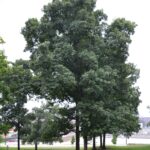
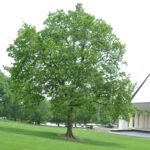
Tree Indiana Native Carya ovata [Shagbark Hickory] The bark of Carya ovata gives the tree its common name and is characteristically rough and shaggy on mature trees, growing in long flat plates, making especially good winter interest. The wood of this tree is especially hard, making it useful for a variety of products. This tree develops a large taproot, making it difficult to transplant.
Tree Indiana Native Carya tomentosa [Mockernut Hickory] This tree is found on ridges, dry hills, and slopes but grows best in moist, well-drained soil. The fall color is deep golden yellow to golden brown and persists. Fruit is round to elliptical with a thick husk splitting at the base and contains an edible seed.
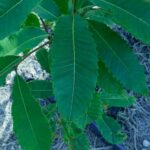
Tree Indiana Native Castanea dentata [American Chestnut] Highly susceptible to chesnut blight, causing this tree to be nearly extinct in the wild.
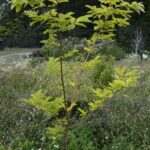
Tree Castanea dentata × mollissima [Dunstan Chestnut] Celebrated due to the quality of its fruit. Excellent nut quality that is attractive to deer and wildlife. Nuts drop in autumn, September-October. Often chosen as an orchard tree.
Liana (Climbing Vine) Indiana Native Celastrus scandens [American Bittersweet] Sun to partial shade (best flowers in full sun), and tolerant of soil conditions (except wet). Tends to be invasive. Birds are fond of fruits. Tends toward dioeciousness. Female plants need a male pollinator to produce more abundant fruits. Can girdle trees it grows on. Euonymus scale and two-marked treehoppers can cause damage.
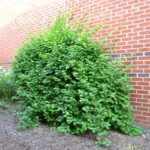
Tree Indiana Native Celtis occidentalis [Common Hackberry] As well adapted to Midwestern conditions as American Elm, and a reasonably good substitute in form as well. Especially useful in large-scale situations with dry soils and heavy winds. Subject to a leaf nipple gall (caused by psyllid insect Pachypsylla dismamma, one of many jumping plant lice) and witches'-broom disease (caused by Eriophyid mite), both minor in most situations in the Midwest. Especially coarse texture limits use in designed landscapes.
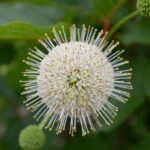
Shrub Indiana Native Cephalanthus occidentalis [Common Buttonbush] Buttonbush is an Indiana native and a wet-soil tolerant shrub found near marshes, wetlands, and river banks. This is a great choice for those wet areas in the landscape or a featured shrub in your rain garden. The flowers of this shrub are globe-like in shape and bloom from June through August, attracting wildlife such as butterflies. The leaves of the Buttonbush emerge late in the Spring and might look dead until mid-May. Though this…
Tree Cercis canadensis 'Appalachian Red' [Appalachian Red Eastern Redbud] 'Appalachian Red' is known for its profusion of intensely bright pink (not quite red) flowers in the spring. A fine small tree that is relatively trouble-free and drought-resistant. Requires some protection from the sun in hotter climates, however flowering decreases with deep shade. Canker, leaf spot, and verticillium wilt can be problematic for older trees, or trees weakened by other environmental stresses. Long tap root means that older plants transplant poorly.
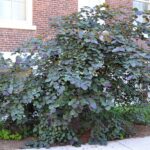
Tree Cercis canadensis 'Forest Pansy' [Purple-Leaf Eastern Redbud] 'Forest Pansy' is a unique and attractive cultivar that has deep purple foliage, which generally fades to a dark, lustrous green in late summer or under drought conditions. Beautiful rose-purple flowers smother the branches in the spring. A fine small tree that is relatively trouble-free and drought-resistant. Requires some protection from the sun in hotter climates, however flowering decreases with deep shade. Canker, leaf spot, and verticillium wilt can be problematic for older trees, or…
Tree Cercis canadensis 'Hearts of Gold' [Gold-Leaf Eastern Redbud] 'Hearts of Gold' is a striking redbud cultivar with reddish-orange tinted emerging leaves that turn bright yellow and finally deepen to a bright green towards the end of the summer. The yellow color develops most intensely under higher light conditions. A fine small tree that is relatively trouble-free and drought-resistant (although the yellow foliage color will become green in drought conditions). Canker, leaf spot, and verticillium wilt can be problematic for older trees, or trees…