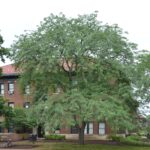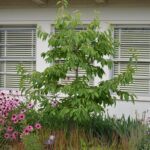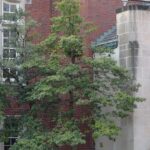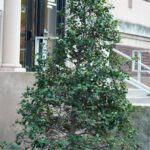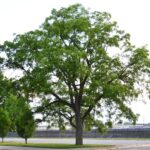
Tree Indiana Native Gleditsia triacanthos f. inermis [Thornless Common Honeylocust] This large tree has finely compound leaves that provide a pleasant, dappled shade in the summer. The thornless forma inermis is only sold in commerce, as the profuse thorns of the species type can be a liability. Mimosa webworm and locust mite are serious pests in the Midwest, and are becoming more serious (especially in areas tending toward monoculture). Can be controlled with spraying.
Tree Halesia carolina 'Arnold Pink' [Pink Carolina Silverbell] This small tree is interesting when in bloom with pink bell-shaped flowers that are larger than the straight species, but this plant is rather neutral otherwise. However, it is relatively trouble free and useful in many situations as a neutral background plant, or for its flowers. Best grown as a single stem and allowed to branch low (20-30"). Does not transplant well (a particular problem with field-grown plants).
Tree Indiana Native Ilex opaca [American Holly] This species, like other hollies, is dioecious, so plant females for fruit and an occasional male for pollination. Winter desiccation injury can occur on leaves in exposed sites. Holly leaf miners are one of the major pest problems for Ilex opaca.
Tree Ilex opaca 'Old Heavy Berry' [Old Heavy Berry American Holly] 'Old Heavy Berry' is an excellent, vigorous female cultivar with good winter hardiness and an abundance of large, bright red fruits. This species, like other hollies, is dioecious, so plant females for fruit and an occasional male for pollination. Winter desiccation injury can occur on leaves in exposed sites. Holly leaf miners are one of the major pest problems for Ilex opaca.
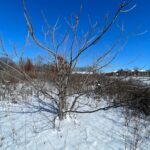
Tree Indiana Native Juglans cinerea [Butternut] Juglans cinera is a large, rounded tree similar to, but overall smaller than the Black Walnut (Juglans nigra). It is not commonly grown for ornamental purposes. The nut, once one is able to crack the hard shell, is edible, sweet, oily, and buttery. Long tap root makes transplanting difficult. This species is valued for its wood and between overharvesting and losses from Butternut Canker (Sirococcus clavigignenti-juglandacearum), this species has become rare in its native habitat.
Tree Indiana Native Juglans nigra [Black Walnut] Nuts are a serious litter problem, staining sidewalks and driveways. Juglone (found in leaf litter and possibly roots) is toxic to many plants, like tomatoes, blackberries, red pines, and many others. Black Walnut wood is valuable and has a variety of commercial uses, especially for furniture.
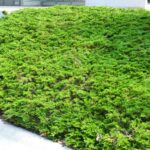
Shrub Indiana Native Juniperus horizontalis [Creeping Juniper] Widely adapted to soils and climates, as evidenced by its broad natural range. Tolerates slightly alkaline and heavy clay soils, but not wet soils. Young plants can be seriously injured by Phomopsis blight in some areas. Plants of all ages are susceptible to mite infestation.
Tree Juniperus virginiana 'Canaertii' [Canaert Eastern Redcedar] 'Canaertii' is a picturesque, pyramidal female cultivar that produces a profusion of bloomy blue berries (cones). Widely adapted to soils and climates. Does well in alkaline soils, but not wet soils. Alternate host for cedar-apple rust disease, and 'Canaertii' is especially susceptible. Plant other juniper species in areas having many apples, hawthorns, etc. Susceptible to bagworms.
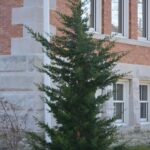
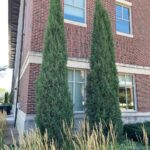
Tree Indiana Native Juniperus virginiana 'Taylor' [Eastern Redcedar] Fantastic upright conical-columnar form; may have originated or been tested through Nebraska Statewide Arboretum. Widely adapted to soils and climates, as evidenced by the species' wide geographic range. Does well in alkaline soils, but not wet soils. Alternate host for cedar-apple rust disease. Plant other juniper species in areas having many apples, hawthorns, etc. Susceptible to bagworms.
Tree Indiana Native Larix laricina [Eastern Larch] The Eastern Larch, or more commonly referred to as Tamarack, is a cold hardy deciduous pine found in northern portions of Canada, Alaska, and as far south as Minnesota, Illinois, and Pennsylvania. The Tamarack grows in particularly moist soils and is salt tolerant. It grows open and pyramidal with a slender trunk, and has horizontal and drooping branchlets. During the fall, its soft, blueish-green needle-like leaves turn a rich, golden color. This tree does best…