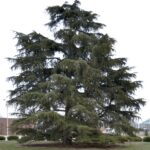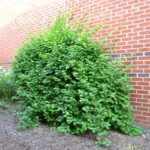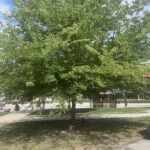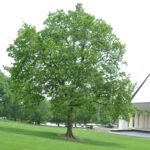
Shrub Chaenomeles japonica [Japanese Flowering Quince] Orange-red to scarlet flowers occur in early to mid-April and are born on one-year-old wood just before the leaves fully emerge, creating an excellent dispersal of coloring throughout the shrub. Sparsely produces small, apple-like fruits, commonly called quinces, that are edible if used in preserves; harvest in October. Widely adapted to different soils and microclimates. Place in full sun location for best flower display, although it is tolerant to partial shade. Subject to occasional scale…
Shrub Chaenomeles × superba 'Crimson and Gold' [Crimson and Gold Flowering Quince] The Crimson and Gold Quince offers season-round interest. Also the Quince plant produces edit Pear-shaped fruit that is bitter right off the stem but can be used in sweet fall recipes. The Crimson and Gold cultivar shows of it's color with bright red flowers that bloom in Spring. In winter the fruits hold on to the thorny stems after the plant loses it's foliage.
Tree Chamaecyparis obtusa 'Confucius' [Confucius Hinoki Cypress] This evergreen is unique with its brightly colored foliage, it has a range of colors including bright yellow, gold, and rich green. This cultivar is a semi-dwarf kind with a pyramidal form. It is best grown in full sun to partial shade and is hardy in zone 5.
Shrub/Tree Chamaecyparis obtusa 'Filicoides' [Fernspray Hinoki Falsecypress] Chamaecyparis obtusa 'Filicoides' is a slow-growing, irregularly-branched, open shrub or small tree that has straggly branches with clusters of fernspray foliage. This plant grows well in average soils, as long as they are well-drained. Provide shelter from the wind.
Tree Chamaecyparis pisifera [Sawara Falsecypress] The species and full-size variants are often used as "quick" foundation and corner plantings, and just as quickly outgrow these situations. These variants should be grown as trees, and the dwarf variants used in more intensive situations. Numerous brown needles and branchlets are retained, and not especially attractive. This species requires good drainage and does not tolerate wet soils. Provide shelter from the wind.
Tree Chionanthus retusus [Chinese Fringetree] The Chinese Fringetree can be a large, multi-stemmed shrub or a small single- or multi-trunked tree. In late spring to early summer, Chionanthus retusus produces a beautiful show of pure, white, fringe-like flowers that are borne in clusters on branch ends. For optimal flowering, place in a full sun location. This species is dioecious and female plants produce very ornamental blue fruits that are attractive to wildlife. Plants of known sex are not usually available…
Tree Chionanthus virginicus [White Fringetree] Dioecious with male plants showier in flower than females; plant a female if fruits are desired. Plants of known sex are not usually available unless selected in the flowering size. One of the last plants to leaf out in the spring.
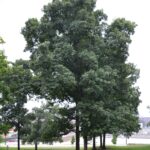
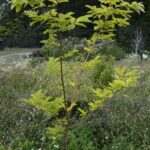
Tree Indiana Native Cladrastis kentukea [American Yellowwood] A highly ornamental native tree, even though the pendulous clusters of flowers do not appear in great numbers every year. Well-adapted to Midwest conditions. Develops a tap root. Does not flower fully each year; part of a tree may flower one year, part the next, but the effect is striking even when only certain branches bear flowers. Bees are attracted to the flowers. Flowers appear only after many years from seed. Avoid pruning in spring…
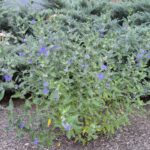
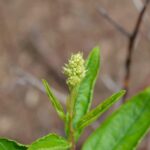
Shrub Indiana Native Clethra alnifolia [Summersweet Clethra] Spreads by underground stems to make large clumps, but can be restrained when necessary. Can be badly infested with mites, especially on dry soils. Can suffer in full sun and/or dry soils, but can bloom well in shade.