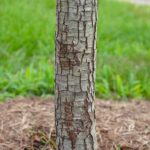
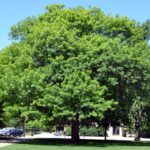
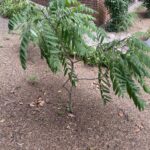
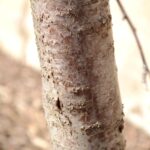
Tree Indiana Native Quercus lyrata [Overcup Oak] The Overcup Oak is a medium-sized oak with an oval crown and lower branches that sweep upward. This species thrives in lowlands and bottomlands and can tolerate extended flooding. The common name is derived from its acorn, which can be nearly 3/4 "cupped" by the cap. Acorns generally aren't produced until the tree is around 25-30 years old.
Tree Indiana Native Quercus pagoda [Cherrybark Oak] Generally only hardy up to zone 6, this oak is larger than the closely related Southern Red Oak (Quercus falcata) and prefers wetter sites. It is native to southeastern regions of the United States and naturally grows as far north as southern Indiana and Illinois.
Tree Indiana Native Quercus palustris [Pin Oak] Handsome tree, distinctive for its regular branching, spreading to horizontal to pendulous, from top to bottom of the tree. This effect is partly lost when lower limbs must be removed for traffic underneath. Requires an acidic soil and is subject to severe iron chlorosis on calcareous soils. This can be corrected but it means additional maintenance.
Shrub Rhododendron catawbiense 'Chionoides' [Chionoides Rhododendron] White flowers have the yellow centers and make numerous dome shaped trusses. The broad, dense plant is easy to grow and has attractive, narrow foliage.
Shrub Indiana Native Rhus copallinum [Flameleaf Sumac] The Flameleaf Sumac is a large shrub or small tree known for its extraordinary, "flaming" red fall color. Its form is initially compact, but then becomes quite open and irregular with age. Spreads by root suckers and forms large colonies, making it inappropriate for small areas.
Shrub Indiana Native Rhus glabra [Smooth Sumac] Large, club-like fruit clusters and rather coarse compound leaves make this a plant that can best be appreciated from a distance, and so it is at its best in large-scale plantings. Picturesque branches. Hard to kill this plant. Can be rejuvenated by cutting to ground in late winter. Plants are dioecious, so only females have the fruiting interest, but all plants are reliably colorful in fall foliage. Spreads rapidly by suckers.
Shrub Rhus typhina 'Bailtiger' [sold as Tiger Eyes®] [Cutleaf Tiger Eyes Staghorn Sumac] The Tiger Eyes cultivar makes a great landscape plant as it suckers less than the species, and for it's nice foliage.
Shrub Indiana Native Robinia hispida var. fertilis [Bristly Locust] Can fix nitrogen. Especially well adapted to poor, dry, alkaline soils. Though native, can be invasive on sandy soils. Frequent pruning may be needed.
Tree Indiana Native Robinia pseudoacacia [Black Locust] Widely variable in form, the most picturesque are straight-trunked with branches abruptly fanning out at the top. Fixes N2. Locust borers are troublesome and difficult to control, but many trees live with them successfully for many years. Leaf minors and permanently wet soils can be problems.