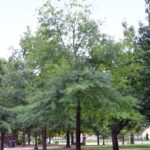
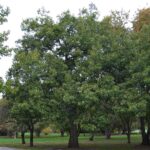
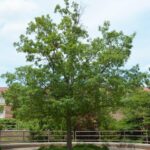
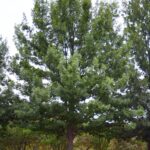
Quercus lyrataIndiana NativeIndiana Native
Overcup Oak

 Plant Type:
 Growth Forms:
 Hardiness:
 Deciduous / Evergreen:
 Flower Notes:
Yellow;red (Long, yellow male catkins; short reddish female catkins; March- April; not ornamentally important)
 Foliage Notes:
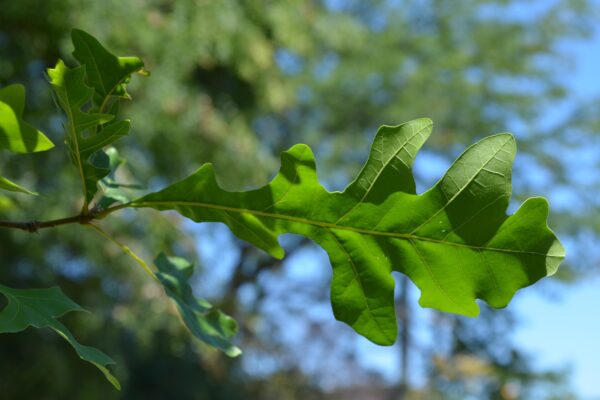
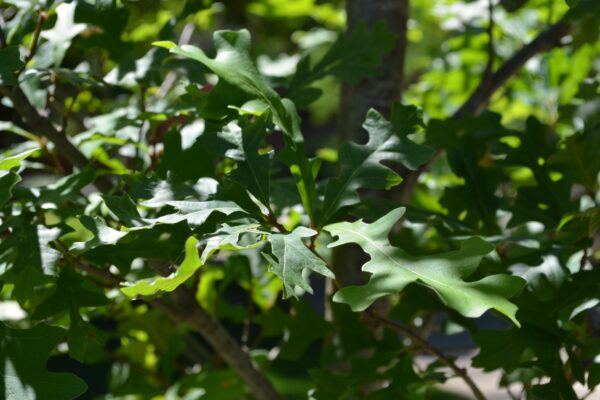
Green (Dark green leaves with deep, rounded lobes; summer); Yellow (Usually poor yellow-brown fall foliage, sometimes an attractive orange-red)
 Stem Notes:
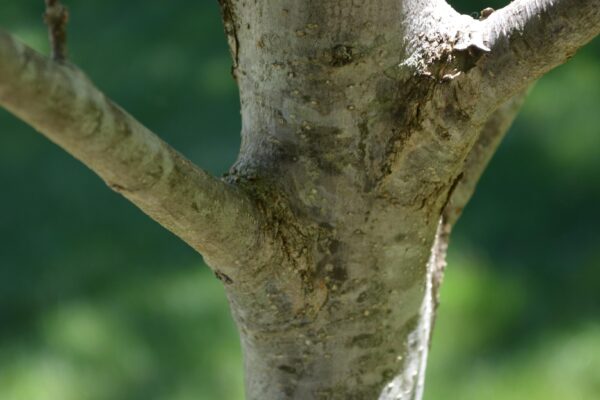
Gray/Silver (pubescent, finally glabrous, scaly buds)
 Fruit Notes:
Brown (Up to 1" long acorn with a cap that can cover up to 3/4 of the nut)
 Ultimate Height:
40-60 feet
 Ultimate Spread:
40-60 feet
 Bloom Times:
 Light Requirements:
 Soil Water Requirements:
 Soil Notes:
Prefers acidic, moist to wet soils
 Range:
Central and Southeastern United States
 Maintenance:
 Diagnostic Characteristics:
Leaves (6-8" long) are alternate and simple with 3-5 pairs of deep, rounded lobes and white to green pubescence underneath. The gray-brown stems are stout and angled. Acorns are 0.75-1" long and wide with a cap that may cover up to 3/4 of the nut.
Additional Information

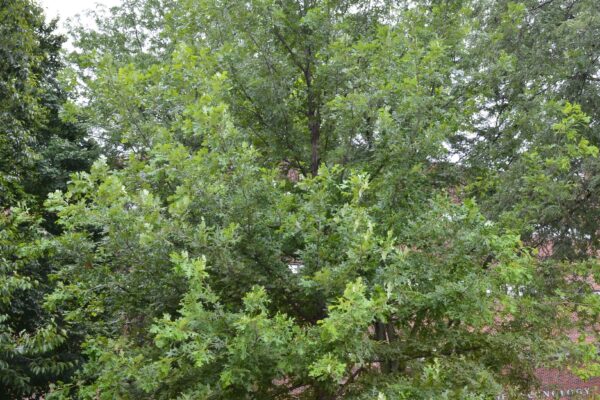
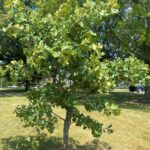
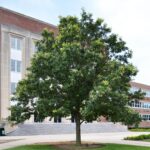
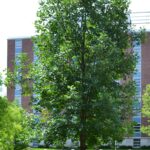
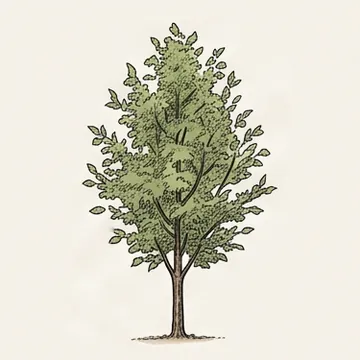
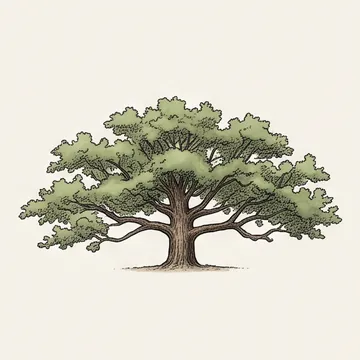
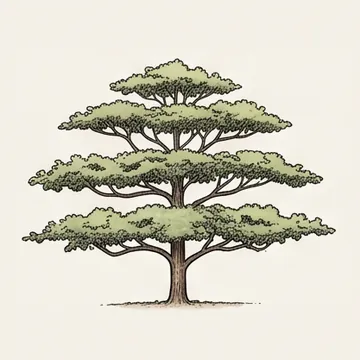
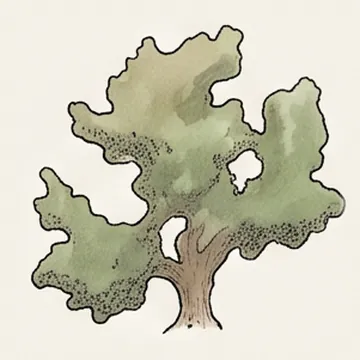
The Overcup Oak is a medium-sized oak with an oval crown and lower branches that sweep upward. This species thrives in lowlands and bottomlands and can tolerate extended flooding. The common name is derived from its acorn, which can be nearly 3/4 "cupped" by the cap. Acorns generally aren't produced until the tree is around 25-30 years old.

The Purdue Arboretum is a collaboration between the Department of Horticulture and Landscape Architecture and Physical Facilities Grounds Department

Purdue Arboretum, 625 Agriculture Mall Dr, West Lafayette, IN, 47907
© 2026 Purdue UniversityAn equal access/equal opportunity universityCopyright ComplaintsMaintained by Purdue Arboretum Explorer
Contact Purdue Arboretum at arboretum@purdue.edu for accessibility issues with this page | Accessibility Resources | Contact Us