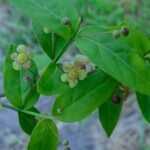
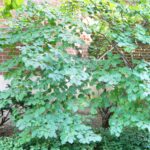
Shrub Indiana Native Dirca palustris [Leatherwood] Dirca palustris is a small, dense, quite rounded, Indiana native shrub with excellent yellow fall coloration. Although it is generally uncommon in the wild, Leatherwood can be found growing naturally and thriving along the ravines of Turkey Run State Park in Marshall, IN. This plant requires rich, moist, acidic soils and should be protected from intense sun. Leatherwood fruits, bark, and roots are poisonous.
Shrub Indiana Native Euonymus americanus [American Euonymus] The American Euonymus is a small, suckering shrub that is native to the eastern portions of the United States, west to Texas. Normally, the American Euonymus can be found in woodlands and can tolerate deep shade and a wide range of soil types. Its flowers are unusual for Euonymus because of its five-petaled flowers instead of the usual four for most other Euonymus species. Other common names, such as Strawberry-bush or Hearts-a-Burstin, are derived from…
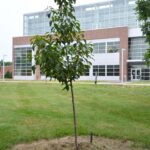
Tree Halesia carolina [Carolina Silverbell] This small tree is interesting in bloom and rather neutral otherwise, but relatively trouble free and useful in many situations as a neutral background plant, or for its flowers. Best grown as a single stem and allowed to branch low (20-30"). Does not transplant well (a particular problem with field-grown plants).
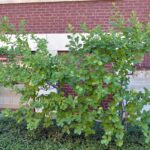
Shrub/Tree Hamamelis vernalis [Vernal Witchhazel] Earliest blooming shrub for the Midwest. Good as a neutral filler for the border with quiet seasonal interest. More pH tolerant than Hamamelis virginiana. Should not be pruned (tip pinching would be acceptable to direct growth). Not as showy in bloom as Hamamelis mollis, the Chinese Witchhazel, or its hybrids.
Shrub/Tree Indiana Native Hamamelis virginiana [Common Witchhazel] Flowers are in evidence because of their spicy fragrance before they are visually obvious, but are fairly showy after leaf drop. Should not be pruned (tip pinching would be acceptable to direct growth).
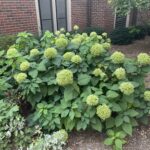
Shrub Indiana Native Hydrangea arborescens [Smooth Hydrangea] The Smooth Hydrangea is an Indiana native found along woodlands and waterways with rocky soils. The flowers of Hydrangea arborescens can be large and heavy, bending stems to the ground. Best used in a shady area or along foundations of buildings for some support. This plant often gets cut back hard to the ground in late winter to maintain a neat look and to promote vigorous flowering the following summer. Hydrangea arborescens is a fast…
Shrub Hydrangea quercifolia [Oakleaf Hydrangea] A unique plant with attractive flower panicles and large, coarse, handsome foliage. Tops (including flower buds formed in fall) can die back when winter temperatures go much below – 20 degrees F (often in Zone 6b and colder). Flowers form on previous season's growth. Thus, no flowers will appear in the years when the tops are killed. May be best used for foliage effect in cold areas. Not very drought tolerant. Spreads by stolons forming…
Shrub Hydrangea quercifolia 'Alice' [Alice Oakleaf Hydrangea] Alice is an upright, stoloniferous shrub with a broad, rounded habit which grows 5-8' tall and similar in witdth. In optimum growing conditions, Alice can reach heights of 12' tall. The flowers of this shrub are the highlight of any landscape with creamy-white, feathery panicles that change to a rosy-pink color with age. Large, coarse green leaves change to a burgundy-red in the fall. Exfoliating stems add texture and color during the winter months. Tops…