Glossary: Flower / inflorescence morphology

Purdue Arboretum botanical terminology reference and learning database.

368 Botanical Definitions 10 Categories A–Z Alphabetical Index Illustrated Growth Forms
Active Category Filter

Flower / inflorescence morphology

← View All Categories
🌳

Illustrated Growth Forms & Tree Silhouettes

Compare visual architectures: fastigiate, columnar, weeping, spreading, and more.

Fastigiate Columnar Pendulous / Weeping
Try searching:
Letter: D Showing definitions beginning with this letter.
× Clear letter filter
Showing 3 definitions
Synonyms: Deadheading, Deadheadings, Deadheads

Deadhead To remove spent flowers from a plant in order to improve appearance or prevent self-seeding. Did you know? Deadheading petunias, roses, and dahlias can extend bloom because the plant keeps producing flowers instead of maturing seeds.
Synonyms: Dehiscences, Dehiscent, Dehiscents, Indehiscent, Indehiscents

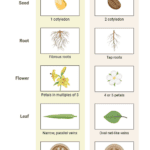
Dehiscence The splitting open of an anther or seed pod. This feature helps explain how flowers are arranged, how pollination happens, or how seeds begin to form. Did you know? Some seed pods explosively dehisce, flinging seeds away from the parent plant.

Synonyms: Dicot, Dicots, Dicotyledons

Dicotyledon A dicotyledon (commonly known as a dicot) is a flowering plant that begins life with two seed leaves, called cotyledons. Dicots typically have broad leaves with branching veins, flower parts in multiples of four or five, and a taproot system. Many trees, shrubs, wildflowers, and garden plants are dicots, including oaks, maples, roses, and sunflowers. Did You Know? Most of the trees found in…

The Purdue Arboretum is a collaboration between the Department of Horticulture and Landscape Architecture and Administrative Operations

Purdue Arboretum, 625 Agriculture Mall Dr, West Lafayette, IN, 47907
© 2026 Purdue UniversityAn equal access/equal opportunity universityCopyright ComplaintsMaintained by Purdue Arboretum Explorer
Contact Purdue Arboretum at arboretum@purdue.edu for accessibility issues with this page | Accessibility Resources | Contact Us