Synonyms:
Falcates
Falcate Sickle shaped, curved. This feature helps describe plant form, function, or identification.
A botanical reference guide of morphological terms, plant structures, propagation techniques, and campus flora definitions.
Explore terms organized by botanical structure, morphology, and arboricultural concepts.
Falcate Sickle shaped, curved. This feature helps describe plant form, function, or identification.
Falls The sepals of an iris. This feature helps explain how flowers are arranged, how pollination happens, or how seeds begin to form.
Family A rank in the scientific classification of plants that groups together related genera sharing key characteristics—often in the structure of their flowers, fruits, or seeds. For example, the rose family (Rosaceae) includes not only roses but also apples, cherries, and hawthorns. Recognizing a plant's family is often the first step in identifying it and understanding how it relates to other plants.
Farinaceous Mealy in texture; starchy. Having an odor variously described as that of raw potatoes, raw cucumbers, or even of soaps
Fascicle A tight bundle. This feature helps describe plant form, function, or identification. Did you know? Counting needles per fascicle helps identify pines: eastern white pine has five; red pine has two.
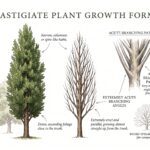
Fastigiate Having close, erect, almost parallel branches that give a narrow, columnar, or spire-like appearance . This term helps explain how a plant grows, survives, spreads, or fits into its habitat. Did you know? Fastigiate trees are useful in narrow spaces because they grow upright and column-like rather than spreading wide.
Fertile Capable of producing seeds or pollen. This feature is connected to how seeds are protected, nourished, or moved away from the parent plant.
Fibril A delicate fiber or hair. This feature helps describe plant form, function, or identification.
Filiferous Covered with threads. This feature helps describe plant form, function, or identification.
Filiform Long and very slender, thread-like. This feature helps describe plant form, function, or identification.


The Purdue Arboretum is a collaboration between the Department of Horticulture and Landscape Architecture and Administrative Operations