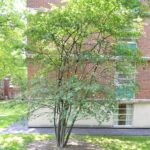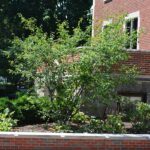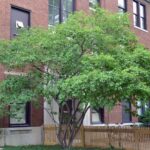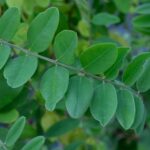
Tree Indiana Native Betula nigra [River Birch] Graceful tree, interesting for its curling bark, and especially well adapted to wet soils. Immune to the bronze birch borer, which is a serious problem for the native Betula papyrifera in the Midwest. This species prefers full sun and is quite heat tolerant, but does not have tolerance for drought. If pruning is required, prune in summer or during the dormant season.
Tree Betula nigra 'Cully' [sold as Heritageā¢] [Heritage River Birch] This vigorous cultivar makes a graceful tree, interesting for its richly colored, strongly curling bark and large, glossy leaves. It is somewhat resistant to leaf spot and is especially well adapted to wet soils. Immune to the bronze birch borer, which is a serious problem for the native Betula papyrifera in the Midwest. This species prefers full sun and is quite heat tolerant, but does not have tolerance for drought. If pruning is required, prune…
Tree Betula pendula [European White Birch] A graceful tree with beautiful white bark and pendulous branches, the European White Birch was once a common tree in many landscapes across the United States. However, the popularity of this species has decreased rapidly due to its extreme susceptibility to the birch borer. Despite its beautiful aesthetics, other birch species, such as Betula nigra (the River Birch), are recommended for use in the landscape instead.
Tree Betula pendula ssp. mandshurica [Asian White Birch] A generally better choice than the species type, Betula platyphylla var. japonica is a larger, graceful tree with thinner, spreading branches and striking pure white bark. It is especially well adapted to wet soilsand does not do well in dry situations. Less subject to the borer troubles of B. papyrifera in the Midwest, although still susceptible.
Tree Indiana Native Betula populifolia [Gray Birch] Beautiful white bark, although becomes dirty gray with age. Does well on the poorest of sterile soils, seeds, and suckers quickly. Grows on sandy, rocky and even gravelly sites. Tolerates both wet and dry conditions. Prefers full sun. Susceptible to leaf miner and cankers; more resistant to the bronze birch borer. Leaf minors especially problematic.
Shrub Buddleia davidii 'Tobudpipur' [sold as Buzz Magenta] [Buzz Magenta Improved Butterfly Bush] The Buzz Magenta Improved Butterfly Bush is connected ecologically as it attracts wildlife. The flower clusters have a strong fragrance and attract hummingbirds and butterflies.
Tree Calocedrus decurrens [California Incensecedar] The California Incensecedar is a large, handsome plant, excellent for formal plantings. In youth it is distinctly columnar and may develop a more conical habit at maturity. This plant is quite adaptable to different types of soils and is drought and heat tolerant once established. The California Incensecedar is known to be quite long-lived and large in the wild, even over 1000 years old and reaching more than 150' in height.
Shrub Calycanthus floridus 'Aphrodite' [Aphrodite Sweetshrub] 'Aphrodite' has an upright form with deep red flowers. The flowers are fragrant and large and bloom throughout the summer season. Large bright green leaves, can grow to be bigger than a human hand.
Liana (Climbing Vine) Campsis radicans [Common Trumpetcreeper] Very tolerant of soils and environment, except it does not tolerate shade. Can be trained as a standard. May require special support on some surfaces, especially as it becomes large and heavy (could pull down weaker structures). May also require pruning to keep size in check.
Tree Indiana Native Carpinus caroliniana [American Hornbeam] A clean, trouble-free small tree, useful in intensive situations such as patios and malls, and equally interesting in naturalized plantings. Useful as a large hedge if coppiced when young. Performs well in heavy shade and tolerates periodic flooding. Difficult to transplant. Move balled-and-burlapped for best results. Sometimes called Blue Beech and Ironwood (although these are best not used).