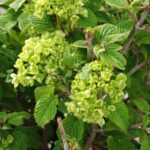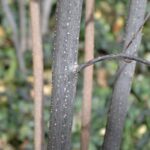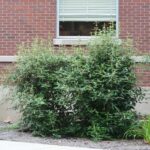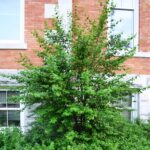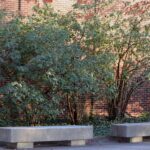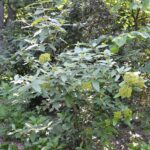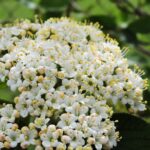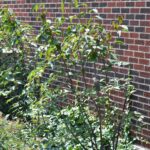
Shrub Audio Recording AvailablePurdue Plant Doctor Available Viburnum × 'Oneida' [Oneida Viburnum] 'Oneida' is a hybrid most similar to its Viburnum dilatatum (Linden Viburnum) parent. This plant is known for profuse flower show in May, followed by continued, albeit sporadic, blooming through summer, and abundant fruits that persist into winter. Wide spreading branches. One of the best viburnums for showy fruits. A different clone as a pollinator helps produce a more abundant fruit set. Borers can sometimes be a problem. Relatively trouble-free. Audio Recording AvailablePurdue Plant Doctor Available
Shrub Audio Recording AvailablePurdue Plant Doctor Available Viburnum × 'Pragense' [Prague Viburnum] More drought tolerant than most Viburnums. Topping may be needed initially to encourage branching. This hybrid arose in Prague, Czechoslovakia in the 1950s. Audio Recording AvailablePurdue Plant Doctor Available
Shrub/Tree Indiana Native Audio Recording AvailableID That Tree Video AvailablePurdue Plant Doctor Available Viburnum prunifolium [Blackhaw Viburnum] Widely tolerant of different soils and exposures. Transplants well. Relatively trouble-free. Can be pruned to form a nice hedge. Scale and borers are occasional problems. The edible fruits are sweet and can be eaten fresh, or used in jams and preserves. Indiana NativeAudio Recording AvailableID That Tree Video AvailablePurdue Plant Doctor Available
Shrub Audio Recording AvailablePurdue Plant Doctor Available Viburnum × rhytidophylloides [Lantanaphyllum Viburnum] Poor tolerance to heavy wind environments. Planting in groups of different clones will help increase fruit production. Audio Recording AvailablePurdue Plant Doctor Available
Shrub Audio Recording AvailablePurdue Plant Doctor Available Viburnum × rhytidophylloides 'Willowwood' [Willowwood Lantanaphyllum Viburnum] Poor tolerance to heavy wind environments. Great plant in the Midwest, flowering in the spring and even sporadically into the fall. Foliage sometimes lasting well into the winter. Prune right after flowering, because new buds for the following year form in the summer. Audio Recording AvailablePurdue Plant Doctor Available
Shrub Purdue Plant Doctor Available Viburnum rhytidophyllum [Leatherleaf Viburnum] The Leatherleaf Viburnum is an evergreen to semi-evergreen shrub that profusely produces large, flat-topped clusters of mildly fragrant flowers in the spring. Shade tolerant and must be protected from harsh winter sun. Poor tolerance to heavy wind environments. Purdue Plant Doctor Available
Shrub Purdue Plant Doctor Available Viburnum sargentii 'Susquehanna' [Susquehanna Sargent Viburnum] 'Susquehanna' is a very large, vigorous shrub (or possibly large tree) noted for its prolific (but stinky) lace-doily-like flowers and handsome, persistent red fruit display. Its heavy, coarse textured branches are covered with an interesting corky bark. Prefers cooler climates and is not recommended for landscapes south of USDA zone 7. Viburnum sargentii is similar to Viburnum opulus (European Cranberrybush Viburnum). Purdue Plant Doctor Available
Shrub Purdue Plant Doctor Available Viburnum setigerum [Tea Viburnum] The Tea Viburnum is most noted for its truly outstanding fruit display. In autumn, branches are heavily laden with large clusters of striking bright red oval berries. For optimal fruit production, plant in groups. Can be quite open and leggy; it is advisable to plant other, shorter, plants in front of the Tea Viburnum. Gained its common name from the fact that the leaves were once used to make tea. Purdue Plant Doctor Available
Shrub Audio Recording AvailablePurdue Plant Doctor Available Viburnum sieboldii [Siebold Viburnum] Transplants easily. Crushed leaves have a green pepper smell. Drought resistance is not good, resulting in leaf scorch. Audio Recording AvailablePurdue Plant Doctor Available
Shrub Indiana Native Audio Recording AvailablePurdue Plant Doctor Available Viburnum trilobum [American Cranberrybush Viburnum] Widely tolerant of soils and microclimates. May be troubled by aphids. Drought resistance is not good. Fruits are used in preserves. Indiana NativeAudio Recording AvailablePurdue Plant Doctor Available