Juniperus virginiana 'Taylor'Indiana NativeIndiana Native
Eastern Redcedar

 Plant Type:
 Growth Forms:
 Hardiness:
 Deciduous / Evergreen:
 Flower Notes:
Yellow (Yellow-brown cones )
 Foliage Notes:
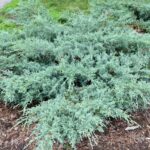
Green (Dark - to bluish-green needle-like and scale-like evergreen leaves that take on a bronze or purple cast in the winter))
 Stem Notes:
Green aromatic stems
 Fruit Notes:
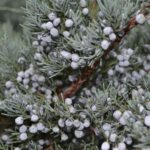
Blue ((Dioecious; attractive blue berries (cones) on female plants))
 Ultimate Height:
30-65 feet
 Ultimate Spread:
6-8 feet
 Bloom Times:
 Light Requirements:
 Soil Water Requirements:
 Soil Notes:
Widely adapted to soils, except those that are wet
 Range:
Eastern North America
 Maintenance:
 Diagnostic Characteristics:
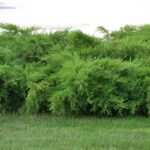
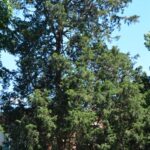
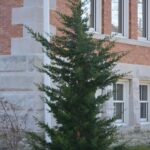
Leaves mostly scale-like, 4-ranked, closely pressed and overlapping, 0.06" long, and free at apex. Awl-like leaves (0.25") are glaucous above, and green below, usually in pairs found mostly on older trees. Terminal shoots are often elongated and turn red to a drab brown in winter. Branchlets are very narrow (less than 1 mm thick). Bruised foliage smells of cedar. Gray brown to red brown bark exfoliates in long strips.

Additional Information

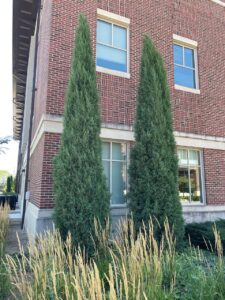
Fantastic upright conical-columnar form; may have originated or been tested through Nebraska Statewide Arboretum. Widely adapted to soils and climates, as evidenced by the species' wide geographic range. Does well in alkaline soils, but not wet soils. Alternate host for cedar-apple rust disease. Plant other juniper species in areas having many apples, hawthorns, etc. Susceptible to bagworms.
The Purdue Arboretum is a collaboration between the Department of Horticulture and Landscape Architecture and Administrative Operations

Purdue Arboretum, 625 Agriculture Mall Dr, West Lafayette, IN, 47907
© 2026 Purdue UniversityAn equal access/equal opportunity universityCopyright ComplaintsMaintained by Purdue Arboretum Explorer
Contact Purdue Arboretum at arboretum@purdue.edu for accessibility issues with this page | Accessibility Resources | Contact Us