
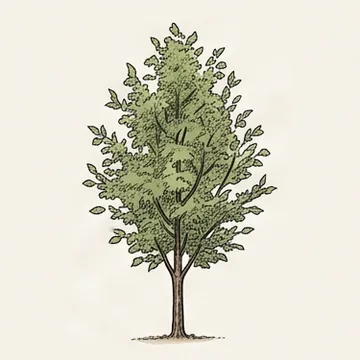
Habit The general shape of a plant. This term helps explain how a plant grows, survives, spreads, or fits into its habitat. Did you know? Knowing mature habit helps gardeners avoid planting a wide-spreading shrub too close to sidewalks or buildings.
Arboretum Botanical Glossary
A botanical reference guide of morphological terms, plant structures, propagation techniques, and campus flora definitions.
Browse by Subject Category
Explore terms organized by botanical structure, morphology, and arboricultural concepts.
Habitat The type of place or environment in which a plant grows wild
Helicoid Coiled like a spiral. This feature helps describe plant form, function, or identification.
Hemispheric Shaped like half of a sphere. This term helps record, compare, or interpret plant and site information.
Hilum A scar indicating the previous point of attachment of a seed or ovary Did you know? The hilum is easy to see on a bean seed as the small scar where the seed was attached to the pod.
Hyaline Thin, membranous, and transparent or translucent. This feature helps describe plant form, function, or identification.
Hybrid A plant resulting by combining the characteristics of one type of plant with another through cross-pollination. This can occur naturally or deliberately through human action. Did you know? Grapefruit is a natural hybrid between pomelo and sweet orange.
Hygrophanous Having the characteristic of changing color upon drying. This feature helps describe mushroom structure, spore production, or fungal identification.
Hypanthium A cup-shaped extension of the floral axis, commonly surrounding or enclosing the pistils. Did you know? Rose hips form from an enlarged hypanthium and are rich in vitamin C.