Floret A small flower, usually part of a cluster. This feature helps explain how flowers are arranged, how pollination happens, or how seeds begin to form. Did you know? Each small disk in the center of a sunflower is an individual floret capable of producing one seed.
Arboretum Botanical Glossary
A botanical reference guide of morphological terms, plant structures, propagation techniques, and campus flora definitions.
Browse by Subject Category
Explore terms organized by botanical structure, morphology, and arboricultural concepts.
Follicle A dry seed pod, which splits open, consisting of a single section and opening along a single side.
Frond The leaf of a fern or palm. Botanists use this feature to describe leaf shape, surface, edge, or arrangement, which helps with plant identification. Did you know? Fern fronds unroll from fiddleheads, coiled young fronds that expand as they mature.
Fruit A ripened seed-containing ovary. This feature helps explain how flowers are arranged, how pollination happens, or how seeds begin to form. Did you know? Botanically, tomatoes, cucumbers, pumpkins, peppers, and beans are fruits because they develop from flower ovaries.
Funnelform Describing a flower whose petals form a funnel shape. This feature helps explain how flowers are arranged, how pollination happens, or how seeds begin to form. Did you know? Funnelform flowers often guide pollinators toward nectar at the base of the tube.
Fusiform Shaped like a spindle - wide in the middle and narrow at the ends.
Gall An abnormal growth caused by insects. This feature helps describe plant form, function, or identification.
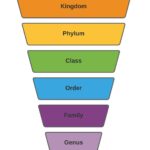
Genus A rank in plant classification that groups together closely related species sharing many characteristics—typically more alike than plants grouped only at the family level. A genus forms the first part of a plant's two-part scientific name; for example, in the oaks ( Quercus ), Quercus rubra (red oak) and Quercus alba (white oak) belong to the same genus. Knowing a plant's genus helps with…
Glabrous Smooth, not hairy. This feature helps describe plant form, function, or identification.
Gland A structure the secretes oily substances. This feature helps describe plant form, function, or identification. Did you know? Sundew leaves use sticky glandular hairs to trap insects, then digest them for nutrients.