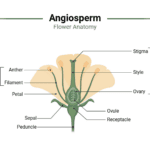
Peduncle The stem that holds up a flower, a group of flowers, or a fruit. It connects these structures to the plant and provides support as they grow. Did You Know? In some plants, such as sunflowers and apples, the peduncle can be quite sturdy because it must support the weight of large flower heads or developing fruits. Did you know? A sunflower peduncle supports…
Arboretum Botanical Glossary
A botanical reference guide of morphological terms, plant structures, propagation techniques, and campus flora definitions.
Browse by Subject Category
Explore terms organized by botanical structure, morphology, and arboricultural concepts.
Peltate Shaped like a disc, with the point of attachment near the center.
Pendent Drooping down, pendulous. This feature helps describe plant form, function, or identification.
Perfoliate Describes a leaf that completely surrounds the stem. Botanists use this feature to describe leaf shape, surface, edge, or arrangement, which helps with plant identification.
Pericarp The outer wall (skin) of a fruit. This feature is connected to how seeds are protected, nourished, or moved away from the parent plant. Did you know? The peel, flesh, and inner shell of many fruits are layers of the pericarp — the ripened ovary wall.
Persistent Remaining attached, not dropping off. This feature helps describe plant form, function, or identification.
Petaloid Petal-like in appearance. This feature helps explain how flowers are arranged, how pollination happens, or how seeds begin to form.
Petiole Leaf-stalk. Botanists use this feature to describe leaf shape, surface, edge, or arrangement, which helps with plant identification. Did you know? The petiole helps position the leaf blade so it can capture light efficiently without shading nearby leaves.
Phenolic Having an odor of the chemical phenol (sickeningly sweet and acrid)
Pinna A single leaflet of a pinnately divided (feather-like) leaf. Botanists use this feature to describe leaf shape, surface, edge, or arrangement, which helps with plant identification.