Synonyms:
Corollas
Corolla The petals of a flower, collectively. This feature helps explain how flowers are arranged, how pollination happens, or how seeds begin to form.

Purdue Arboretum botanical terminology reference and learning database.
Corolla The petals of a flower, collectively. This feature helps explain how flowers are arranged, how pollination happens, or how seeds begin to form.
Corona Petal-like or crown-like structures between the petals and stamens of some flowers.
Corymb A flat-topped flower cluster in which the outer flowers open first Did you know? Flat-topped corymbs create landing platforms where pollinators can visit many small flowers efficiently.
Cyme A convex or flat flower cluster, with the central flowers opening first
Cypsela A dry single-seeded, fruit consisting of an achene with a closely adhering calyx sheath, characteristic of the aster family (Asteraceae or Compositae.) Did you know? Each tiny dandelion “parachute” carries a cypsela, a one-seeded fruit of the aster family.
Deadhead To remove spent flowers from a plant in order to improve appearance or prevent self-seeding. Did you know? Deadheading petunias, roses, and dahlias can extend bloom because the plant keeps producing flowers instead of maturing seeds.
Dehiscence The splitting open of an anther or seed pod. This feature helps explain how flowers are arranged, how pollination happens, or how seeds begin to form. Did you know? Some seed pods explosively dehisce, flinging seeds away from the parent plant.
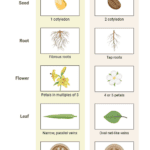
Dicotyledon A dicotyledon (commonly known as a dicot) is a flowering plant that begins life with two seed leaves, called cotyledons. Dicots typically have broad leaves with branching veins, flower parts in multiples of four or five, and a taproot system. Many trees, shrubs, wildflowers, and garden plants are dicots, including oaks, maples, roses, and sunflowers. Did You Know? Most of the trees found in…
Falls The sepals of an iris. This feature helps explain how flowers are arranged, how pollination happens, or how seeds begin to form.
Floret A small flower, usually part of a cluster. This feature helps explain how flowers are arranged, how pollination happens, or how seeds begin to form. Did you know? Each small disk in the center of a sunflower is an individual floret capable of producing one seed.


The Purdue Arboretum is a collaboration between the Department of Horticulture and Landscape Architecture and Administrative Operations