Locule A seed-containing cell within a fruit or the pollen-containing compartment within an anther. Did you know? Tomato seed chambers are locules; each juicy section contains seeds attached to the inner fruit wall.
Glossary: Flower / inflorescence morphology
Purdue Arboretum botanical terminology reference and learning database.
Flower / inflorescence morphology
Lodicule Paired rudimentary scales at the base of the ovary in grass flowers
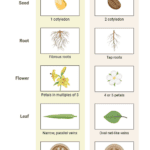
Monocotyledon A monocotyledon (commonly referred to as a monocot) is a flowering plant that begins life with a single seed leaf, known as a cotyledon. Monocots typically have long, narrow leaves with parallel veins, flower parts in multiples of three, and fibrous root systems. Common examples include grasses, lilies, orchids, palms, and many garden flowers. Did You Know? Many of the plants we use every…
Nutlet A small nut; one of the lobes or sections of the mature ovary of some members of Boraginaceae, Verbenaceae and Labiatae (Laminaceae)
Palea A chaffy scale or bract; the uppermost of the two bracts (lemma and palea), which subtend a grass floret.
Panicle A drooping flower cluster. This feature helps explain how flowers are arranged, how pollination happens, or how seeds begin to form.
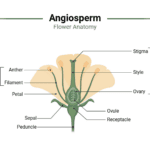
Pedicel The stalk of a flower. This feature helps explain how flowers are arranged, how pollination happens, or how seeds begin to form.
Peduncle The stem that holds up a flower, a group of flowers, or a fruit. It connects these structures to the plant and provides support as they grow. Did You Know? In some plants, such as sunflowers and apples, the peduncle can be quite sturdy because it must support the weight of large flower heads or developing fruits. Did you know? A sunflower peduncle supports…
Petaloid Petal-like in appearance. This feature helps explain how flowers are arranged, how pollination happens, or how seeds begin to form.
Raceme An elongated cluster of flowers on a stalk. This feature helps explain how flowers are arranged, how pollination happens, or how seeds begin to form.