Synonyms:
Depauperates
Depauperate Stunted or poorly developed. This feature helps describe plant form, function, or identification.
A botanical reference guide of morphological terms, plant structures, propagation techniques, and campus flora definitions.
Explore terms organized by botanical structure, morphology, and arboricultural concepts.
Depauperate Stunted or poorly developed. This feature helps describe plant form, function, or identification.
Dextrinoid A type of chemical staining reaction in which the tissues of certain fungi (spore wall ornamentation, etc.) stains reddish to reddish-brown in Melzer's reagent.
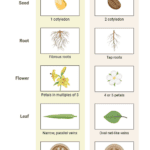
Dicotyledon A dicotyledon (commonly known as a dicot) is a flowering plant that begins life with two seed leaves, called cotyledons. Dicots typically have broad leaves with branching veins, flower parts in multiples of four or five, and a taproot system. Many trees, shrubs, wildflowers, and garden plants are dicots, including oaks, maples, roses, and sunflowers. Did You Know? Most of the trees found in…
Dimorphic Having two different forms, often a juvenile form and an adult form. Did you know? English ivy has different juvenile and adult leaf forms; the adult flowering form has unlobed leaves.
Disarticulating Separating at its joints when mature. This feature helps describe plant form, function, or identification.
Disciform Disk-shaped. This feature helps describe plant form, function, or identification.
Dissected Deeply divided into many narrow segments. This feature helps describe plant form, function, or identification. Did you know? Finely dissected leaves, such as some Japanese maples, create a delicate texture valued in garden design.
Distal At the end - away from the point of attachment.
Distally Occurring opposite to the point of attachment. This feature helps describe plant form, function, or identification.
Distended Stretched or swollen. This feature helps describe plant form, function, or identification.


The Purdue Arboretum is a collaboration between the Department of Horticulture and Landscape Architecture and Administrative Operations