Synonyms:
Midribs
Midrib Midrib is a botanical term used to describe a plant structure, growth form, position, surface feature, or reproductive feature.

A botanical reference guide of morphological terms, plant structures, propagation techniques, and campus flora definitions.
Explore terms organized by botanical structure, morphology, and arboricultural concepts.
Midrib Midrib is a botanical term used to describe a plant structure, growth form, position, surface feature, or reproductive feature.
See Midribû
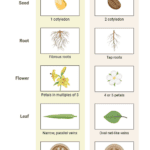
Monocotyledon A monocotyledon (commonly referred to as a monocot) is a flowering plant that begins life with a single seed leaf, known as a cotyledon. Monocots typically have long, narrow leaves with parallel veins, flower parts in multiples of three, and fibrous root systems. Common examples include grasses, lilies, orchids, palms, and many garden flowers. Did You Know? Many of the plants we use every…
Monomorphic Having only a single form. This term helps record, compare, or interpret plant and site information.
Monotypic Referring to a genus that has but one species. This term helps classify plants so they can be identified and discussed clearly. Did you know? Ginkgo biloba is the only living species in its genus and one of the most isolated trees on Earth.
Mucro A short, sharp, abrupt tip. This feature helps describe plant form, function, or identification.
Muricate Rough, with small sharp points. This feature helps describe plant form, function, or identification.
Mycelium The thread-like portion of a fungus, excluding the fruiting or reproductive structures. They may or may not be visible. Groups of strands may join to form thick strands called rhizomorphs Did you know? Mycorrhizal mycelium connects plant roots underground and helps many trees obtain water and nutrients.
Mycorrhiza A symbiotic relationship between a fungus and the roots of a plant
Nectar A sugary, sticky fluid secreted by many plants. This feature helps describe plant form, function, or identification. Did you know? Honey begins as flower nectar collected by bees and concentrated inside the hive.


The Purdue Arboretum is a collaboration between the Department of Horticulture and Landscape Architecture and Administrative Operations